Signed in as:
filler@godaddy.com
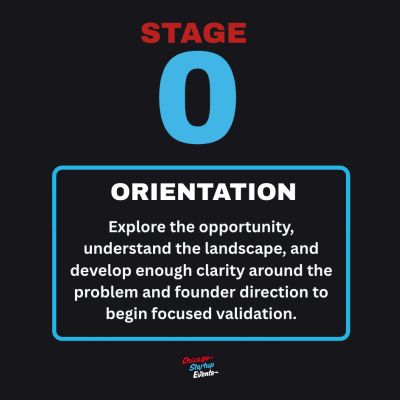
Stage 0 asks a central question:
“Is this a problem I want to pursue, right now?”
At this stage, the focus is on understanding the opportunity, the founder's relationship to it, and whether there is enough conviction and capacity to begin investigating it seriously.
Founders are clarifying what they believe the problem is, who may experience it, why it matters to them, and what pursuing it would require given their current priorities, resources, and constraints.
The goal is to develop enough clarity to decide whether this is worth pursuing into validation.
Not every idea needs to become a company. Orientation helps determine which ones deserve the next step.

Serves: First-time and early-exploring founders assessing whether and how to pursue a startup path
Fit: Provides exposure, education, and low-commitment entry points that help founders understand the startup landscape before choosing a problem to solve.
Operating Stages Supported: Stage 0: Orientation, Stage 1: Problem Validation, Stage 2: Solution Shaping, Stage 3: First Traction, Stage 4: Readiness for Scale

Serves: DePaul students, alumni, and aspiring entrepreneurs developing new ventures or exploring entrepreneurship.
Fit: Provides entrepreneurship education, mentorship, venture programming, and startup resources that help founders validate ideas, refine business models, and launch early-stage ventures.
Operating Stages Supported: Stage 0: Orientation, Stage 1: Problem Validation, Stage 2: Solution Shaping, Stage 3: First Traction

Serves: Black, Latino, and women entrepreneurs seeking business readiness, funding preparation, and strategic support
Fit: Provides business assessments, targeted education, and resource navigation to help underrepresented founders strengthen their businesses and prepare for capital and long-term growth.
Operating Stages Supported: Stage 0: Orientation, Stage 1: Problem Validation, Stage 2: Solution Shaping

Serves: Aspiring and early founders seeking perspective from experienced operators
Fit: Founder stories and community programming help individuals calibrate expectations and decide whether to commit to the startup journey.
Operating Stages Supported: Stage 0: Orientation, Stage 1: Problem Validation, Stage 2: Solution Shaping, Stage 3: First Traction, Stage 4: Readiness for Scale

Serves: Women entrepreneurs and small business owners launching, growing, or expanding businesses.
Fit: Provides business advising, education, capital readiness, and procurement support that helps entrepreneurs build stronger businesses and achieve sustainable growth.
Operating Stages Supported: Stage 0: Orientation, Stage 1: Problem Validation, Stage 2: Solution Shaping, Stage 3: First Traction, Stage 4: Readiness for Scale

An insight-driven article unpacking the often-overlooked realities of starting a business, helping aspiring founders set realistic expectations and avoid early misconceptions before committing time, capital, and identity.

YC Group Partner Harj Taggar shares his advice on the types of people best suited to be startup founders and how to prepare to start a company in the future.

A grounded talk on where strong startup ideas actually come from—rooted in lived problems, personal insight, and observation, not brainstorming sessions or trend-chasing.

An accessible introduction to design thinking, showing how empathy, experimentation, and iteration help founders frame problems correctly before jumping to solutions or building prematurely.

YC Partner Jared Friedman shares advice on how to get startup ideas. This video was recorded for the future founder track in Startup School 2020.
